
- Featured, Events, Webinar
Learn how CIP helps neurodivergent young adults (with ASD, ADHD, and other learning differences) prepare for independence, college, and careers.
Watch Now On-Demand!
Original Broadcast Date:
Wednesday, February 25, 2026
6pm ET

CIP Webinar On-Demand
Click Here to watch the recording on-demand!
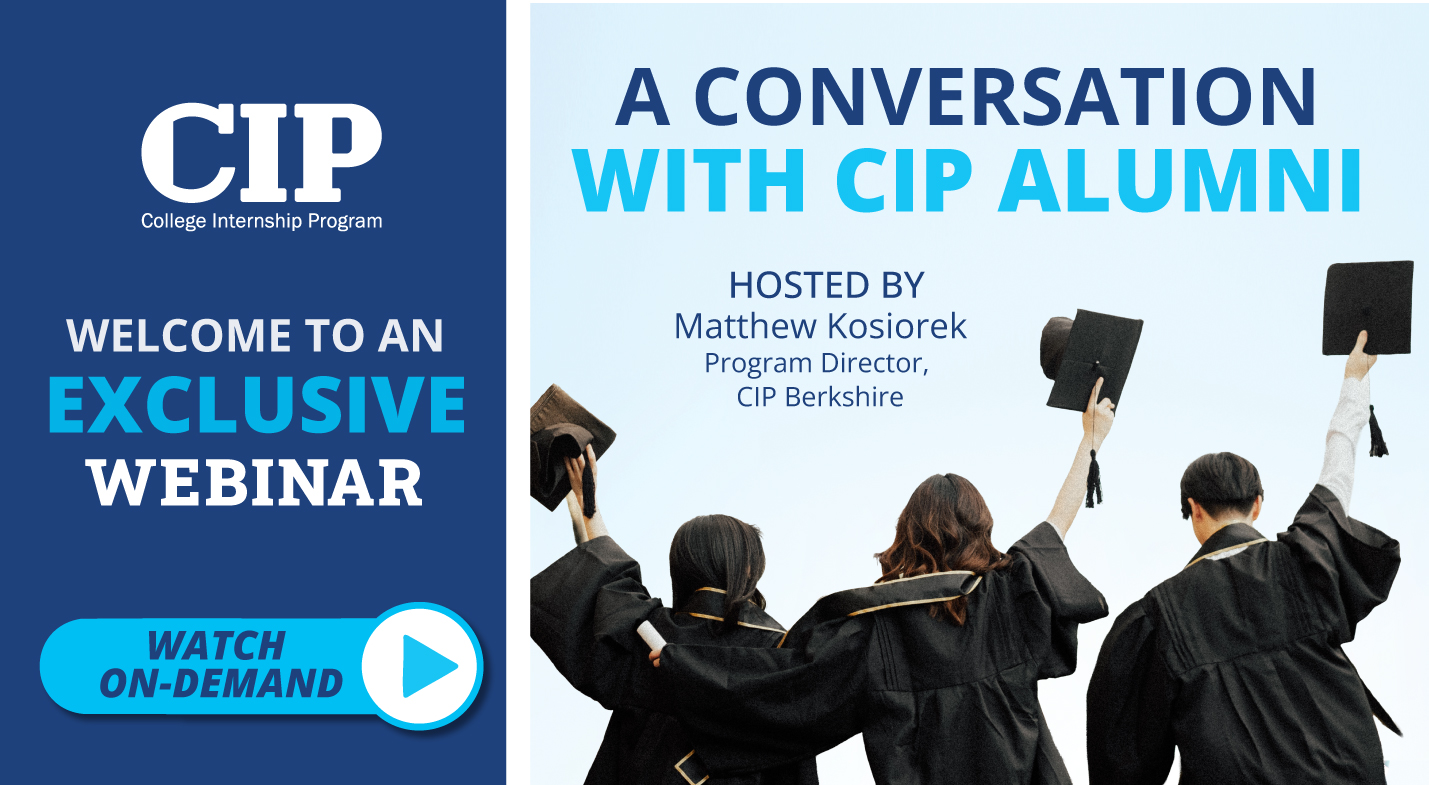
CIP Exclusive Webinar: A Conversation With CIP Alumni & Alumni Parent — Key Takeaways
Families exploring postsecondary options for neurodivergent young adults often share one central question: What happens after the program ends? In this exclusive webinar, the College Internship Program (CIP) brought together alumni and parents to answer that question firsthand — offering candid reflections on their journeys before, during, and after their time in the program.
Hosted by National Admissions Director Kevin Broeckling and moderated by CIP Berkshire Center Program Director Matthew Kosiorek, the discussion highlighted more than four decades of CIP’s mission to help students build independence, confidence, and meaningful adult lives.
Searching for the Right Fit
For many families, the path to CIP begins after traditional options fall short. Parent panelist Claudia described the difficulty of finding a comprehensive program that addressed her son Zach’s academic, social, executive functioning, and independent living needs all at once.
After COVID disruptions and an unsuccessful attempt at a traditional college experience, her family discovered CIP’s Summer Program — a turning point that led to full enrollment.
“There really wasn’t anything near us that combined executive functioning, social skills, independent living, college, and career planning,” she explained. “CIP had everything we were looking for — and more.”
Her experience echoed a common theme: many students arrive at CIP after realizing that readiness for independence involves more than academics alone.
Concerns Before Starting
Alumni Jared shared that he entered CIP after leaving college early and facing personal hardships. Visiting the Berkshire Center changed his outlook immediately.
“I took one look around and called my mom and said, ‘I think this might be exactly what I need right now.’”
Others came seeking independence, structure, or direction. Kyle explained that he enrolled primarily to learn how to live on his own and function successfully in everyday life. James described arriving at CIP feeling detached and unmotivated but determined to avoid a more restrictive living situation.
Despite different starting points, each panelist emphasized that CIP met them where they were.
Growth Through Real-World Challenges
Panelists noted that some of the most impactful learning came from everyday experiences — especially living with roommates and managing responsibilities.
Students discussed:
- Learning to coexist with people who had different personalities and needs
- Developing time management and executive functioning skills
- Practicing communication and conflict resolution
- Participating in therapy, advising, and residential meetings
- Receiving ongoing feedback through self-assessments
As Kyle explained, navigating shared living spaces helped him understand compromise and flexibility — skills essential in adult life.
Claudia added that these experiences also foster empathy:
“He realized he wasn’t the only one who had struggles. Some of the most compassionate people I’ve met are the friends he made at CIP.”
Creative Arts, Community, and Belonging
Beyond academics and career preparation, panelists highlighted the program’s strong sense of community and opportunities for personal expression.
Many students participate in creative arts programs, including theater productions. Claudia described the annual performances as transformative for her son, noting that every student could contribute — whether on stage, backstage, or in technical roles.
Family and Alumni Weekends were also cited as powerful reminders of the lasting bonds formed through the program. Several alumni reported maintaining friendships and connections years after graduating.
Where Are They Now?
Perhaps the most compelling part of the webinar was hearing where alumni are today:
- Kyle lives independently, manages his own household, and works in warehouse operations at a regional arena facility. He maintains a strong community through friends and church involvement.
- Jared holds an associate degree in human services, works in e-commerce at Whole Foods, and continues to support his family at home by choice.
- James transferred to George Mason University, where he is exploring studies in government, history, and music while continuing his personal growth journey.
- Zach (Claudia’s son) completed the full program and has secured employment, with independent living as a future goal.
Across stories, success looked different for each individual — but all emphasized increased confidence, self-awareness, and direction.
Lessons Learned — What They Would Do Differently
When asked what they might change if they could do CIP again, panelists offered thoughtful reflections:
- Prioritizing sleep and daily routines
- Focusing more on personal goals rather than trying to help everyone else
- Seeking opportunities to explore activities beyond structured programming
- Discovering CIP earlier in their journey
Notably, Claudia said she would not change the experience itself — only that she wished her family had found the program sooner.
A Shared Message of Hope
Throughout the conversation, one message stood out: progress is possible, even when the path is not linear.
Panelists spoke openly about setbacks, uncertainty, and continued growth after graduation. Rather than presenting a single definition of success, the webinar illustrated a spectrum of outcomes — independence, education, employment, relationships, and community engagement.
As Matthew Kosiorek noted, the foundational skills developed at CIP — resilience, self-advocacy, and executive functioning — prepare students for lifelong learning and adaptation.
Final Thoughts
For families considering CIP, this alumni panel offered something brochures cannot: authentic voices describing real experiences and real outcomes.
From discovering independence to building lasting relationships and pursuing meaningful careers, the stories shared during the webinar demonstrate that with the right supports, neurodivergent young adults can thrive in adulthood — on their own terms.